
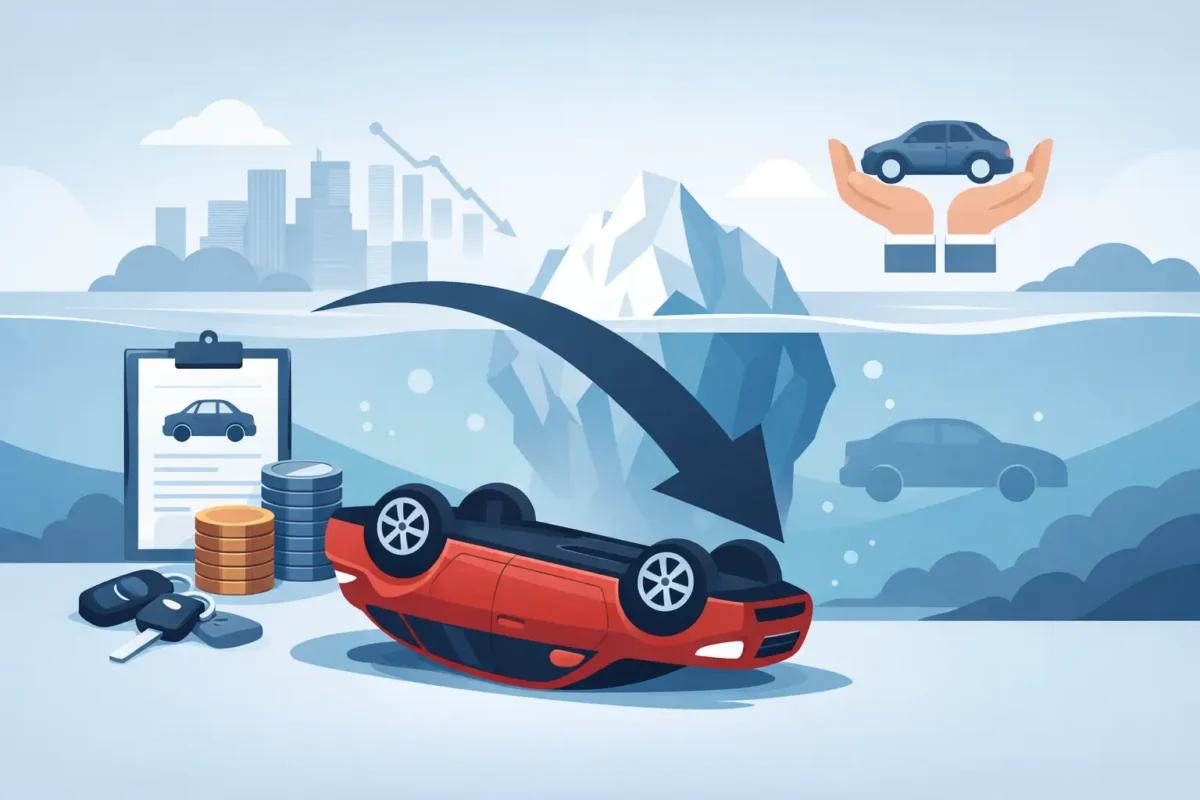
If you need to refinance upside down car loan debt, the first thing to know is this: being underwater does not always shut the door. It makes approval harder, and it narrows your options, but it does not automatically mean you are stuck. What matters most is how far upside down you are, what your credit looks like today, and whether refinancing would actually improve your situation instead of stretching it out.
What it means to be upside down on a car loan
An upside down car loan means you owe more on your auto loan than your vehicle is worth right now. You may also hear it called being underwater or having negative equity. This usually happens when a car depreciates faster than your loan balance drops.
It is common after buying a vehicle with a small down payment, rolling old debt into a new car loan, choosing a long loan term, or paying a high interest rate. If your car is worth $18,000 but your payoff amount is $22,000, you are $4,000 upside down.
That gap matters because lenders look at loan-to-value ratio, often called LTV. The higher that ratio, the more risk they see. If the loan balance is far above the car’s current value, some lenders will decline the application even if your payment history is solid.
Can you refinance an upside down car loan?
Yes, in some cases you can refinance an upside down car loan. The key is whether a lender’s guidelines allow enough negative equity and whether the new loan still makes financial sense for you.
Some lenders will refinance a vehicle with negative equity if the amount is relatively modest, your credit profile is strong, your income supports the payment, and the vehicle meets age and mileage requirements. Others may require that you pay down part of the balance first before they can approve the refinance.
This is where expectations matter. If you are only slightly upside down, refinancing may still be realistic. If you are deeply upside down, the better move may be to keep making payments for a while, add extra toward principal when possible, and revisit refinancing after the gap narrows.
When refinancing can help and when it may not
Refinancing is usually worth a serious look when your current loan has a high APR, your credit has improved since you first financed the car, or you need to reduce monthly pressure in your budget. A lower rate can save money over time. A longer term can lower the monthly payment. In some cases, you can improve both.
But there are trade-offs. Lowering the payment by extending the term can give you breathing room now while increasing total interest paid over the life of the loan. That may still be the right move if cash flow is tight, but it should be a conscious decision.
Refinancing may not help if your rate is already competitive, your negative equity is steep, or your vehicle no longer fits typical lender guidelines because of mileage, age, or condition. It also may not be the best move if fees or add-on products from the old loan have inflated the balance so much that a new lender cannot make the numbers work.
How lenders decide whether to approve a refinance upside down car loan request
Every lender has its own criteria, but most are looking at the same core factors. They want to know the vehicle’s current value, your remaining balance, your payment history, your credit score, your income, and whether the car itself qualifies.
LTV is one of the biggest pieces. If the value supports the new loan closely enough, approval is more likely. Credit matters too. If your score has improved since you got the original loan, that can offset some risk and help you qualify for a better rate.
Your debt-to-income ratio also plays a role. Even if the car has negative equity, a lender may feel more comfortable approving the loan if your overall monthly obligations are manageable and your income is stable. The car’s age and mileage matter because lenders generally prefer vehicles that still hold enough market value to support the loan.
What you can do before you apply
If you are trying to refinance upside down car loan debt, a little prep can make a real difference. Start by confirming your payoff amount with your current lender. Then estimate your car’s current value using a realistic private-party or trade-in range, depending on what the lender uses.
Next, check your credit. Even a modest score improvement can change your options. If your utilization is high, paying down credit cards before applying may help. If you have any past-due accounts, bringing them current can strengthen your application.
It also helps to gather proof of income, residence, insurance, and vehicle details in advance. A smooth application process matters when you are comparing offers and trying to move quickly.
Ways to improve your chances of approval
If the first answer is no, that does not always mean no forever. Sometimes the issue is timing. Paying extra toward principal for a few months may reduce the negative equity enough to move into an approvable range.
A better credit profile can help too. If your score is rising because you have been making on-time payments and reducing revolving balances, refinancing may become more realistic sooner than you think. In some cases, waiting a short period and reapplying can lead to a very different result.
You can also focus on the structure of the refinance. A lender may be more willing to approve a term that balances payment relief with manageable risk, rather than the longest term available. The right loan is not just the one that gets approved. It is the one that improves your position.
What to watch out for
Not every refinance offer is automatically a win. A lower monthly payment can look great until you see that the loan term is much longer or the total interest cost is higher than expected. Read the full terms, not just the payment amount.
You should also pay attention to whether optional products are being financed into the new loan. Products like GAP coverage or vehicle service contracts can be valuable for some drivers, but they should be a clear choice, not a surprise addition. If you are already upside down, any added balance deserves a second look.
And if your current loan includes prepayment penalties or cancellation rules for existing protection products, ask how those will be handled. Small details can affect the math.
A simpler path for borrowers who want fast answers
For many borrowers, the hardest part is not understanding the idea of refinancing. It is figuring out whether they qualify without spending hours chasing paperwork or risking a complicated process. That is why a streamlined online application can make such a difference.
OpenRoad Lending focuses on helping drivers explore refinance options quickly, with a simple digital process and no-obligation quote. If your goal is to lower your monthly payment, improve your rate, or find more workable terms, getting a fast answer can help you decide whether now is the right time to act.
Should you refinance now or wait?
It depends on the size of your negative equity and the reason you want to refinance. If your current payment is straining your budget and you may qualify for better terms today, it is worth checking your options now. Relief this month can matter more than chasing the perfect scenario later.
If you are only upside down because you recently bought the car and the gap is still large, waiting may improve your chances. As you make payments and the vehicle value stabilizes, the loan may become easier to refinance.
The right move is the one that improves your real-world finances, not just the one that sounds good on paper. If refinancing can lower your payment, reduce your rate, or give you terms that fit your budget better, it is worth exploring. If not, a short wait and a focused plan to improve your position can put you in a stronger spot soon.
When your car loan feels heavier than it should, the smartest next step is not guessing. It is getting clear numbers and seeing what is actually possible.