
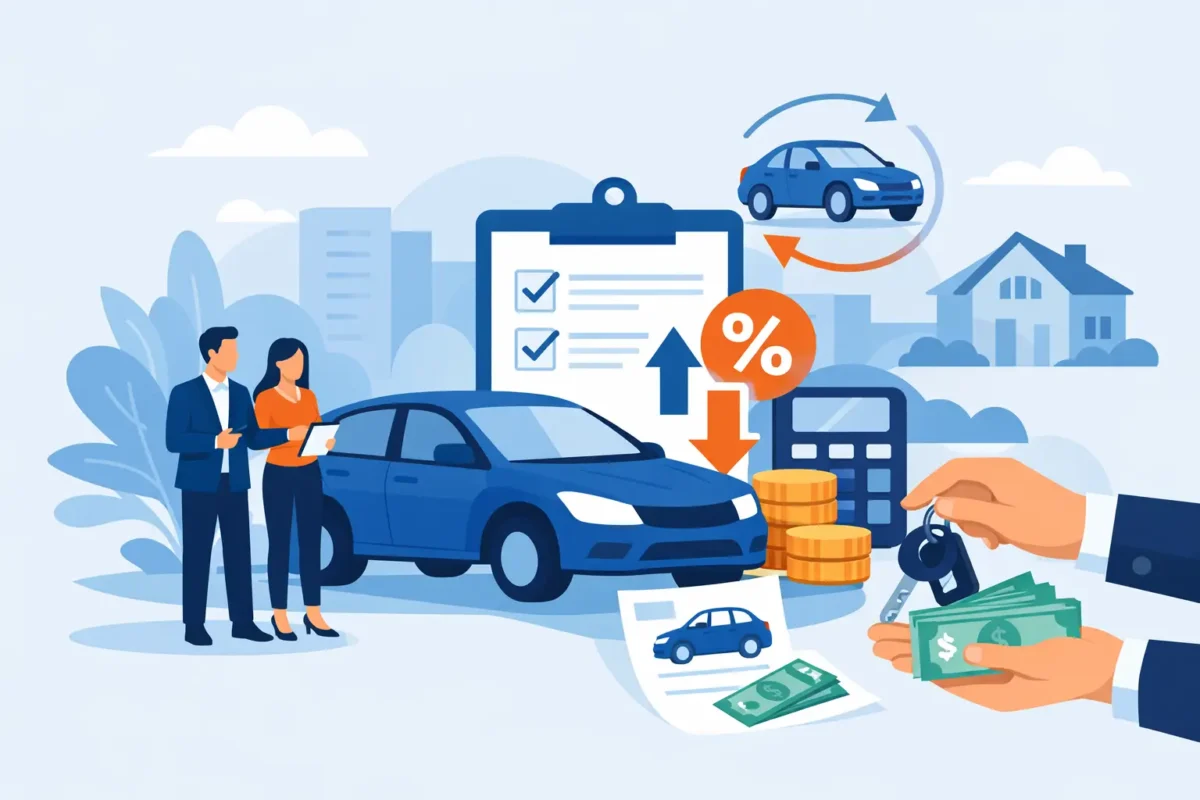
That car payment looked manageable when you signed the loan papers. A few months later, it can feel a lot heavier. If you’re looking at your budget and wondering whether there’s a smarter way to handle your current loan, the top reasons to refinance auto loan usually come down to one thing: keeping more of your money each month without giving up the vehicle you need.
Refinancing replaces your current auto loan with a new one, ideally with better terms. For many drivers, that means a lower monthly payment, a lower interest rate, or both. But the right time to refinance depends on your loan, your credit, your vehicle, and your goals. Here are the biggest reasons people refinance and what to think about before you do.
Top reasons to refinance auto loan and save money
The most common reason to refinance is simple: your current loan is costing you more than it should. Maybe you bought when rates were high. Maybe your credit score has improved since you financed the car. Maybe the dealer-arranged loan was convenient at the time, but not especially competitive.
When you refinance into a lower rate, more of your payment can go toward principal instead of interest. Over the life of the loan, that can add up to meaningful savings. Even a modest rate reduction can make a difference, especially if your remaining balance is still substantial.
This is where refinancing becomes practical, not theoretical. You’re not changing cars or taking on a new vehicle expense. You’re trying to improve the loan attached to the car you already own.
1. Lower your monthly payment
For many households, cash flow matters just as much as total long-term savings. A lower monthly payment can free up room in your budget for groceries, gas, insurance, utilities, or emergency savings.
There are two main ways refinancing can lower your payment. The first is getting a better interest rate. The second is extending the repayment term. Both can reduce the amount due each month, but they work differently.
If your new payment drops because your interest rate improved, that’s often the strongest outcome. If your payment drops because your term gets longer, you’ll get more breathing room now, but you may pay more interest over time. That trade-off can still be worth it if your immediate goal is to reduce financial pressure.
2. Get a better interest rate
A better rate is one of the strongest reasons to refinance because it can help both now and later. It may lower your payment, reduce total interest charges, or both.
This is especially relevant if your credit has improved since you first got the loan. Maybe you’ve made consistent on-time payments, reduced other debt, or corrected past credit issues. Lenders often price loans based on risk at the time of approval. If your profile is stronger today than it was then, your current loan may no longer reflect what you qualify for.
Rates can also vary widely between lenders. If your original financing came through a dealership, it may not have been your lowest possible option. Refinancing gives you a chance to compare and potentially move into a more favorable loan.
3. Remove pressure from a tight budget
Sometimes the reason to refinance isn’t chasing the absolute lowest rate. It’s creating breathing room. A car is essential for many Americans. It’s how you get to work, pick up your kids, run errands, and handle daily life. If the payment is stretching your budget too far, refinancing can help make that expense more manageable.
This matters even more if your household costs have changed. Rent may be higher. Insurance premiums may have gone up. Other debt payments may have increased. A lower auto payment can be one of the fastest ways to reduce monthly strain without making a major lifestyle change.
In that sense, refinancing is not just about the loan. It’s about stability.
When the top reasons to refinance auto loan make sense
Not every borrower refinances for the same reason. In some cases, it makes sense because your financial picture improved. In others, it makes sense because your original loan wasn’t a great fit in the first place.
4. Replace a dealer loan with better terms
Dealer financing is convenient, but convenience and value are not always the same thing. Many borrowers accept financing at the dealership because they want to complete the purchase and drive away the same day. Later, when the dust settles, they realize the rate, term, or overall structure of the loan could be better.
Refinancing gives you a second chance. If your existing loan includes a high APR or terms that no longer fit your budget, switching to a new lender may help you secure something more affordable and easier to manage.
This is one reason a streamlined online refinance process matters. If applying feels complicated, many people put it off. But when the process is quick and straightforward, it becomes much easier to act on a chance to save.
5. Change your loan term to fit your goals
Your ideal loan term depends on what matters most right now. If your goal is to lower your monthly payment, a longer term may help. If your goal is to pay the vehicle off faster and reduce interest costs, a shorter term may be the better move.
Refinancing can give you that flexibility. You are not stuck with the exact structure you accepted when you bought the car.
That said, this is where trade-offs matter. A longer term can lower the monthly payment but increase the total interest paid over time. A shorter term can save money in interest but raise your monthly payment. The right answer depends on whether you need more room in your budget today or want to become debt-free sooner.
6. Move away from a loan you no longer trust
Some borrowers refinance because they want a better experience, not just better numbers. Maybe your current lender’s service is frustrating. Maybe account management is inconvenient. Maybe you’re looking for a lender that makes the process clearer and easier to navigate.
That may sound less urgent than rate savings, but confidence matters when you’re managing a monthly bill. A lender with a simple digital process, fast decisions, and real customer support can make the whole experience less stressful. For borrowers who want speed and less paperwork, that can be a real advantage.
OpenRoad Lending built its refinance process around that need, helping drivers check options quickly and move toward lower payments without unnecessary friction.
7. Improve overall loan value, not just the payment
A lower payment gets attention, and for good reason. But it should not be the only thing you evaluate. A refinance can also improve the overall value of your loan by reducing the interest rate, adjusting the term, or pairing financing with optional protection products that support long-term ownership.
For example, some borrowers want to review whether products like GAP coverage or a vehicle service contract make sense as part of their broader vehicle budget. That decision depends on the age of the vehicle, the remaining balance, and how long you plan to keep the car. It is not right for everyone, but for some drivers, protection and payment strategy go hand in hand.
Before you refinance, check these practical details
Refinancing can be a smart move, but it works best when the numbers support it. Start by reviewing your current rate, monthly payment, remaining balance, and months left on the loan. Then compare that with a refinance offer.
Look beyond the payment alone. Ask how much interest you’ll pay over the remaining life of the loan. Check whether extending the term helps enough to justify the added time in debt. Make sure your vehicle meets lender requirements, since age, mileage, and loan balance can affect eligibility.
It also helps to think about timing. If your credit has improved recently, you may be in a better position than when you first financed. If rates have shifted or your current loan came with a high APR, refinancing may be worth a closer look now rather than later.
A smart reason is the one that fits your life
The best reason to refinance is not always the flashiest one. For some drivers, it’s about saving on interest. For others, it’s about getting a lower monthly payment that makes the rest of the budget work better. And for many, it’s both.
If your current loan feels expensive, inflexible, or out of step with where you are financially today, it may be worth seeing what better terms look like. A few minutes spent reviewing your options could lead to real savings and a payment that feels easier to live with month after month.