
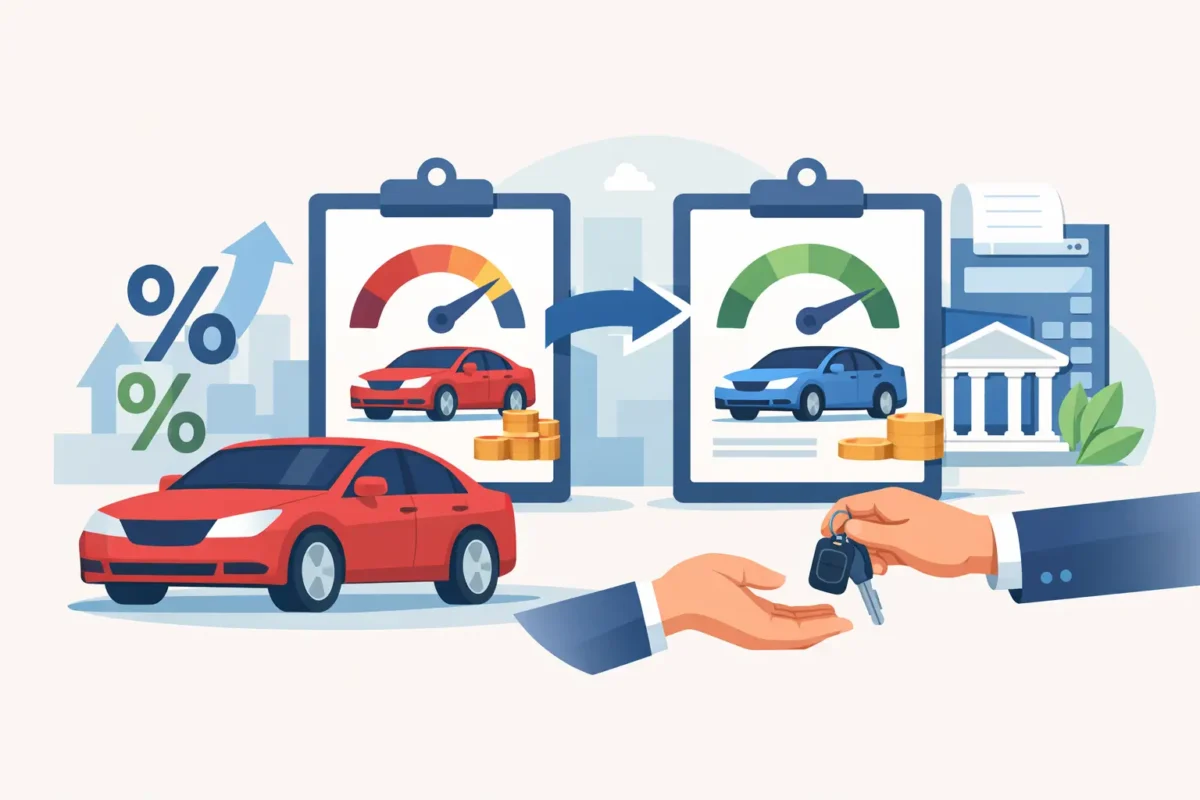
A car payment that once felt manageable can become a monthly strain fast. If your rate is high, your budget has changed, or you accepted the first financing offer available, you may be able to replace a high interest car loan with a refinance loan that better fits where you are now.
Refinancing does not mean giving up your vehicle or starting over with a new car purchase. It means replacing your existing auto loan with a new one. The new lender pays off the old balance, and you make future payments under your new rate, term, and payment schedule.
When It Makes Sense to Replace a High Interest Car Loan
The most obvious reason to refinance is a lower interest rate. Even a modest rate reduction can lower the cost of borrowing, especially if you have a sizable balance and years left on your loan. But a lower rate is not the only reason to explore your options.
Many drivers refinance to lower their monthly payment and create more room for groceries, rent, utilities, insurance, or savings. Others want to shorten their loan term so they can pay off their vehicle sooner. The right choice depends on what matters most to your household right now: immediate payment relief, less interest over time, or a balance of both.
You may be a stronger refinance candidate than you were when you bought the vehicle. Perhaps your credit has improved through on-time payments, your income is more stable, or market rates have changed since you signed your original contract. Your current loan does not have to be permanent simply because it was the best option at the time.
Signs it may be worth getting a quote
Consider checking refinance offers if your current rate seems high, your monthly payment is stretching your budget, or you financed your vehicle when your credit profile was less established. It can also be useful if you bought from a dealership and felt pressured to take the financing offered without much time to compare.
A refinance quote gives you real numbers to evaluate. You do not need to guess whether a different loan could help. Compare the proposed rate, estimated payment, loan term, and total amount you would repay before deciding.
How Auto Loan Refinancing Works
The refinance process is generally straightforward. You apply with information about yourself, your current loan, and your vehicle. The lender reviews your application, credit profile, income, vehicle details, and remaining loan balance. If approved and you accept the offer, the new loan pays off the existing lender.
From there, you make payments to the new lender. Your old auto loan should show a zero balance once the payoff is processed, though it is smart to confirm that payoff with your prior lender and keep your records.
The vehicle remains yours to drive. In most cases, the lender simply changes its lienholder status while the loan is active. You may need to update your insurance company with the new lender’s information after the refinance is complete.
What Lenders Look At Before Offering a New Loan
A refinance lender wants to understand both your ability to repay and the value of the vehicle securing the loan. Credit is one factor, but it is not the whole picture. Lenders may also consider your payment history, income, current debt obligations, vehicle age, mileage, loan balance, and the amount of time left on your current loan.
Your loan-to-value ratio can matter as well. This compares what you owe with what the vehicle is worth. If you owe much more than the vehicle’s value, refinancing may be more difficult or may not produce the terms you want. That does not mean it is never possible, but it makes comparing offers especially important.
Having a recent pay stub, proof of residence, vehicle registration, insurance information, and your current loan statement ready can help you move through the process faster. Your loan statement typically includes the payoff amount, account number, interest rate, and current payment.
Lower Payment or Shorter Term? Know the Trade-Off
A lower monthly payment can provide meaningful relief, but it is worth looking at how that payment is created. Sometimes the new lender lowers your payment through a better interest rate. Other times, the payment drops because the repayment period is extended.
Extending the term can be the right move when cash flow is the immediate priority. A lower payment may help you avoid falling behind on other bills and make your budget more predictable. The trade-off is that keeping a loan longer can increase the total interest paid, even if the rate is lower.
If your budget allows, a shorter loan term may help reduce total interest and get you out of debt sooner. The payment could be higher, though. There is no one best refinance structure for every driver. Focus on the option that supports your financial goals without creating a payment you will struggle to maintain.
Compare the Numbers That Matter Most
Do not choose a refinance offer based on the monthly payment alone. A payment that looks attractive can come with a longer term or fees that change the overall value of the loan. Review the complete offer carefully.
Pay close attention to the annual percentage rate, the number of months in the new term, the estimated monthly payment, and the total amount of payments over the life of the loan. Also ask whether there are any fees, prepayment penalties on your existing loan, or requirements related to vehicle age, mileage, or insurance coverage.
A simple comparison can make the decision clearer. Put your current loan details next to the new offer. If the refinance lowers your payment, determine whether the savings match your needs. If it lowers your total borrowing cost, estimate how much you could save over time. If it does both, that may be a strong reason to move forward.
Steps to Take Before You Apply
Start by reviewing your current loan statement. Confirm your interest rate, monthly payment, remaining balance, payoff amount, and months left on the loan. This gives you a clear baseline for any new offer.
Next, check your budget. Decide whether your main goal is reducing the payment, reducing the rate, paying off the car sooner, or finding a healthier combination of those outcomes. Knowing your goal helps you evaluate offers with confidence instead of reacting to the first number you see.
Then gather your basic information and request a refinance quote. A digital process can make this easier, especially when you need answers quickly. OpenRoad Lending provides an online refinance experience designed to help eligible vehicle owners explore better loan terms without unnecessary complexity.
Finally, read the final loan documents before accepting. Make sure the payment, rate, term, and any optional products are what you expected. Optional protection products, such as GAP coverage or a vehicle service contract, may be valuable for some drivers, but they should fit your needs and budget rather than being treated as automatic additions.
What If You Do Not Get the Terms You Want?
A refinance application does not always result in a lower rate or payment. Vehicle value, remaining balance, credit history, and lender requirements can affect the offer. If the numbers do not improve your situation, it may make sense to keep your current loan for now rather than force a change that costs more in the long run.
You can still take productive steps. Continue making every payment on time, reduce other high-cost debt if possible, avoid adding unnecessary balances to credit cards, and revisit refinancing after your credit profile or loan balance improves. A few months of positive payment history can make a difference.
Replacing an expensive auto loan is not about chasing the lowest advertised number. It is about finding a payment and term that give your budget more breathing room while keeping your long-term costs in view. A no-obligation quote can be a practical first step toward a car loan that works harder for you, not against you.