
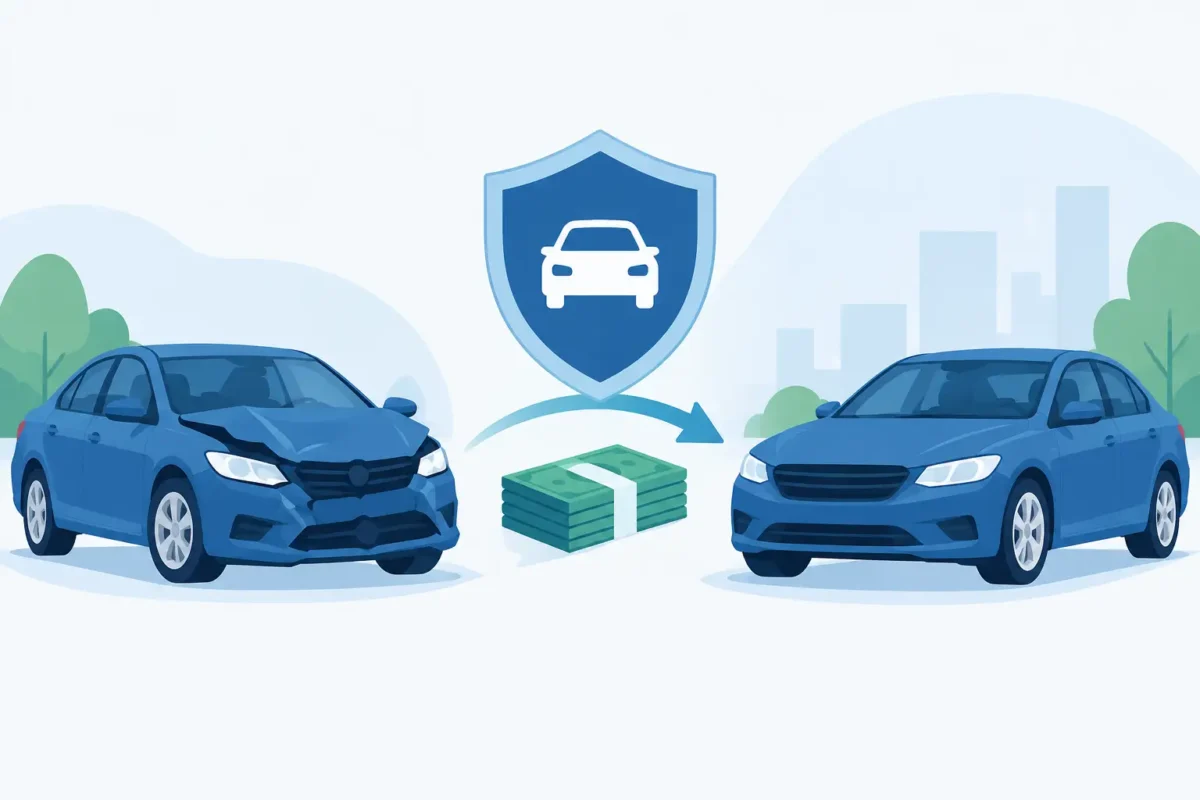
A serious accident can turn a dependable car into an unexpected financial problem in one day. This GAP coverage claim example shows why: your auto insurer may pay the vehicle’s current value, while your loan payoff can be thousands of dollars higher. GAP coverage may help with that difference, subject to the terms, limits, and exclusions in your agreement.
A GAP Coverage Claim Example With Real Numbers
Imagine you bought a vehicle for $32,000 and financed most of the purchase. After taxes, fees, and interest, your original loan amount was $34,500. Two years later, you still owe $26,000 on the loan.
Then the vehicle is stolen and never recovered, or it is damaged beyond repair in an accident. Your comprehensive or collision insurer declares it a total loss and determines the vehicle’s actual cash value is $21,500. After subtracting your $1,000 insurance deductible, the insurer sends $20,500 to your lender.
Your loan balance does not disappear just because the vehicle is gone. In this example, you owed $26,000, but the insurance payment was $20,500. That leaves a $5,500 shortfall.
If you have eligible GAP coverage, the provider may pay all or part of that $5,500 deficiency. The final amount depends on your specific contract. Some plans may also cover part of your deductible, while others do not. Certain loan charges, late fees, missed payments, extended warranty balances, and other add-ons may be excluded.
The key number is not what you originally paid for the vehicle. It is the difference between your covered insurance settlement and the payoff amount on the date of loss.
Why a GAP Balance Can Happen So Quickly
Vehicles generally lose value faster in the first few years of ownership than a typical auto loan balance declines. That gap can be larger when you made a small down payment, financed for a longer term, rolled negative equity from a previous loan into the new loan, or included taxes and fees in your financing.
For example, a 72- or 84-month loan can make the monthly payment easier to manage, but the balance may remain high for longer. That does not make a longer term wrong. It simply means your loan payoff and your vehicle’s market value may not move at the same pace.
A total loss is also more common than many drivers expect. It does not always mean a vehicle is completely destroyed. If repair costs approach or exceed the insurer’s threshold compared with the vehicle’s value, the insurer may total it. A theft that is not recovered can lead to the same result.
What Happens When You File a GAP Claim
A GAP claim usually starts after your primary auto insurer has completed its total-loss evaluation. GAP is not a replacement for comprehensive or collision insurance. Your auto policy is typically the first coverage involved, and GAP addresses a qualifying remaining balance afterward.
The process often follows a straightforward sequence. First, report the accident or theft to your auto insurer and, for theft, law enforcement. Next, notify your lender and GAP administrator as soon as you learn the vehicle may be a total loss. They can tell you what forms and documents are required.
After the insurer issues its settlement, your lender provides the payoff information. The GAP administrator compares the settlement, the deductible if eligible, and the outstanding loan balance against the terms of your agreement. If the claim is approved, the GAP payment generally goes to the lender, not directly to you.
That last detail matters. GAP is designed to reduce or eliminate a qualifying loan deficiency. It does not usually provide money for a replacement vehicle, a down payment on another car, or missed work after an accident.
Documents that can keep your claim moving
Requirements vary, but claim administrators commonly ask for your total-loss settlement statement, your loan payoff statement, the GAP agreement or contract number, and an itemized breakdown of the loan balance. You may also need a copy of your insurance declarations page, police report for a theft, repair estimate, and proof that the insurance settlement was paid.
Keep copies of every document, including emails and notes from phone calls. If the lender’s payoff figure changes because of daily interest, ask for an updated statement promptly. Missing paperwork is one of the most common reasons a claim takes longer than expected.
What GAP May Not Cover
GAP can be valuable protection, but it is not a blank check. Before assuming a balance will be paid, review the contract carefully and ask the administrator about any limits that apply to your situation.
Many agreements exclude amounts caused by missed payments, late charges, collection costs, or loan modifications made after the coverage started. Coverage may also exclude balances related to products that were financed with the vehicle, depending on the plan. If you received money back from your insurer for unused service contracts or other canceled products, that refund could be applied to the loan balance before GAP calculates any payment.
Some GAP plans have a maximum benefit or cap the covered deficiency at a percentage of the vehicle’s value. Others may not cover a deductible at all. There can also be eligibility rules involving loan-to-value limits, commercial use, rideshare or delivery use, salvage titles, or lapses in required auto insurance.
The practical takeaway is simple: do not wait for a total loss to read the fine print. Know what you bought, what it covers, and which circumstances could reduce a payment.
How to Prepare Before a Total Loss Happens
The best time to organize claim information is while everything is still routine. Save your GAP agreement, loan documents, insurance declarations, and lender contact information in a place you can access without your vehicle. A secure digital folder can make a stressful situation easier to manage.
You should also maintain the insurance coverage required by your lender and make payments on time. A lapse in comprehensive or collision coverage can create a much larger problem because GAP generally depends on a valid primary insurance settlement.
Review your loan balance at least a few times each year. If you are significantly upside down, refinancing may be worth exploring. A lower interest rate, a better term, or a payment that better fits your budget can help you make steady progress on the balance. Refinancing does not erase negative equity, and it is not right for every borrower, but it can be a useful way to improve your overall loan terms.
Questions to Ask About Your Own Coverage
If you already have GAP, call the administrator or lender and ask whether your agreement covers your current loan type and vehicle use. Confirm whether there is a maximum payout, whether the deductible is included, and whether any financed add-ons are excluded. Ask what deadline applies for reporting a claim, too.
If you are considering GAP with a vehicle loan or refinance, compare the actual cost with the protection provided. The value depends on how much you owe compared with what the vehicle is worth, how long you expect to finance it, and how much financial strain a remaining balance would cause after a total loss.
A GAP coverage claim example makes the purpose clear: it can help prevent a totaled or stolen car from leaving you with a loan payment for a vehicle you no longer have. Keep your documents organized, understand your coverage before you need it, and make sure your auto loan still supports the financial goals you have for the road ahead.