
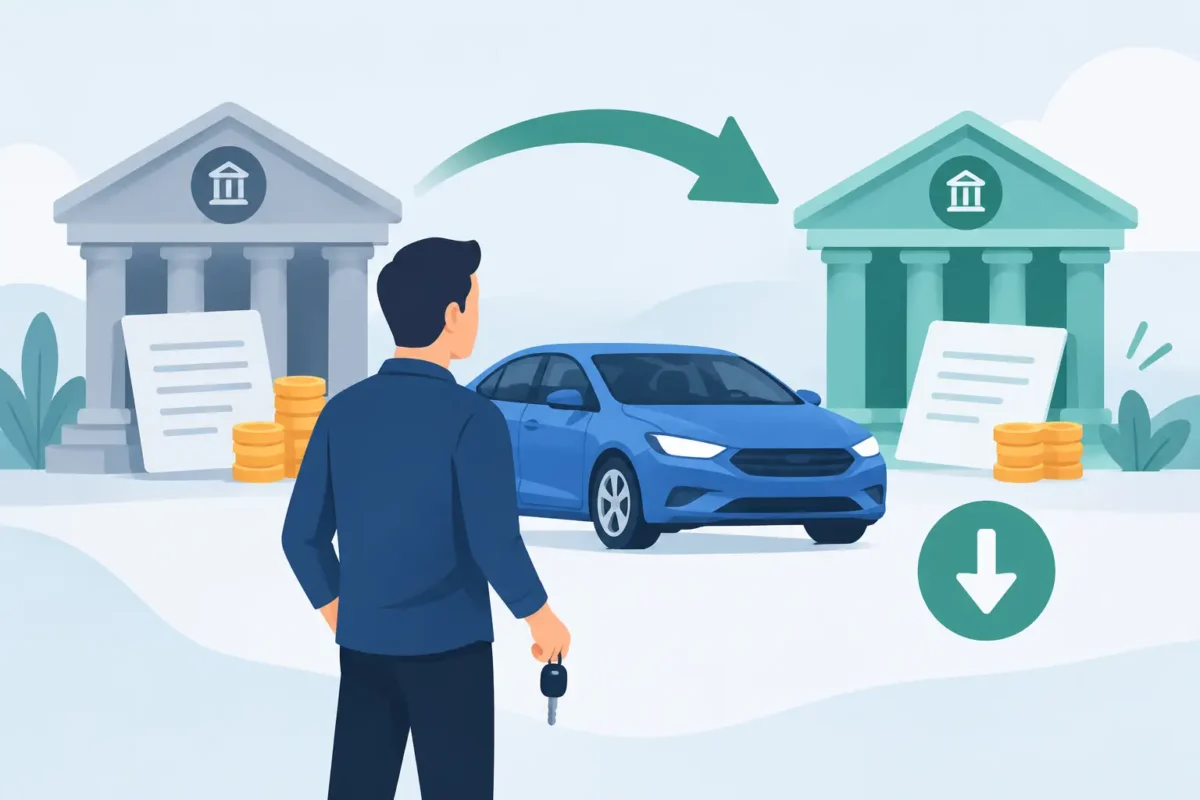
A car payment that made sense two years ago can feel very different after a rate increase, a change in income, or a closer look at your budget. If you are wondering how to change car lenders, the answer is usually auto loan refinancing: replacing your current loan with a new loan from a different lender.
You keep your vehicle. Your new lender pays off the existing loan, and you begin making payments under the new terms. For many drivers, that can mean a lower monthly payment, a better interest rate, or both. The key is making sure the new loan improves your situation rather than simply stretching out the debt.
How to Change Car Lenders Through Refinancing
Changing car lenders is not like transferring an account from one bank to another. You are applying for a new auto loan. Once approved and finalized, the new lender handles the payoff to your current lender, and your old loan account is closed after the payoff clears.
The process is generally straightforward:
- Review your current loan, including your payoff amount, interest rate, monthly payment, and remaining term.
- Check whether refinancing could improve your rate, payment, or loan structure.
- Request quotes from lenders that offer auto refinancing.
- Compare the full terms, not just the advertised payment.
- Choose an offer and complete the lender’s verification process.
- Confirm that your previous lender receives the payoff and that the old account is closed.
You should continue making payments to your current lender until you receive confirmation that the old loan has been paid off. Missing a payment while the refinance is being completed can create unnecessary late fees and may affect your credit.
Start With the Numbers That Matter
Before applying, pull together the basics of your current auto loan. You will want your current lender’s name, account number, estimated payoff amount, monthly payment, interest rate, and remaining number of payments. Your vehicle identification number, current mileage, and vehicle details may also be requested.
The payoff amount deserves special attention. It is the amount required to satisfy your loan today, which may be slightly different from the balance shown on your latest statement because interest accrues daily. Ask your current lender for a payoff quote if you want the most accurate figure.
Next, consider what you want from a new loan. A lower rate can reduce the total cost of borrowing. A lower payment can create more room in your monthly budget. Those goals often overlap, but not always.
For example, extending your repayment term may lower the payment even if your interest rate does not change much. That may be the right move when cash flow is tight, but a longer term can also mean paying more interest over time. Compare the total amount you would repay, not only the monthly number.
When changing lenders may make sense
Refinancing may be worth considering if your credit has improved since you got your original loan, market rates have changed, or your initial loan came with a high rate. It can also help if you want to adjust the loan term to better fit your current budget.
Drivers sometimes refinance after a period of on-time payments, especially if they financed when their credit profile was less established. A stronger credit history may help you qualify for more favorable terms, although approval and rates are never guaranteed.
It may be less helpful if you are near the end of your current loan. By that point, much of the interest may already be paid, so the potential savings could be limited. Refinancing can also be more difficult if you owe significantly more than your vehicle is worth or if your vehicle does not meet a lender’s age, mileage, or value requirements.
Compare Offers Beyond the Monthly Payment
A low payment gets attention for a good reason: it can provide immediate breathing room. Still, it is only one part of the decision. Review each refinance offer carefully and compare the annual percentage rate, loan term, estimated total finance charge, and any applicable fees.
A lender may offer a noticeably lower payment by adding months to your loan. That can be helpful if your priority is reducing monthly pressure, but it is not automatically the least expensive option. On the other hand, a shorter term may raise the payment while helping you pay off the vehicle sooner and reduce total interest.
Also ask whether the new loan has a prepayment penalty. Many auto loans do not, but you should verify the terms. Flexibility matters if you plan to make extra payments or pay off the loan ahead of schedule.
Requesting a quote can give you a clearer view of what is possible before you commit. With OpenRoad Lending, eligible drivers can explore refinance options through a simple online process and receive a no-obligation quote. The goal is not just a new lender – it is a loan that better supports your financial goals.
What Lenders Typically Review
Auto refinance lenders evaluate both the borrower and the vehicle. Your credit history, income, debt obligations, payment history, and requested loan amount can all affect eligibility and the terms you receive.
The vehicle matters, too. Lenders commonly consider its age, mileage, make, model, current value, and title status. A vehicle with excessive mileage or a loan balance that is far above its value may limit available options.
Be ready to provide documentation if requested. That can include proof of income, proof of residence, insurance information, and a copy of your registration. Providing accurate information from the start can help avoid delays later in the process.
A credit inquiry may be part of a completed refinance application. If you are comparing options, try to do your research within a focused time frame and ask each lender what type of inquiry they use at each stage. Knowing what to expect helps you shop with confidence.
Avoid These Common Refinancing Mistakes
The biggest mistake is focusing only on the payment. A lower payment is valuable, but you should understand whether it comes from a lower rate, a longer term, or both. Read the loan disclosure before accepting an offer.
Another mistake is canceling insurance coverage or allowing your registration to lapse during the refinance process. Lenders generally require active insurance, and a gap in coverage can slow approval or funding.
Do not assume the old loan is paid off the moment you sign new paperwork. Processing times can vary. Watch your old loan account, save confirmation records, and verify the account is closed with a zero balance. If you had automatic payments set up with your former lender, cancel them only after the payoff is confirmed.
Finally, do not ignore products connected to your current loan. If you purchased optional protection, such as GAP coverage or a vehicle service contract, contact the provider to understand whether the coverage transfers, remains in place, or may qualify for cancellation or a refund. The answer depends on the product and contract terms.
After You Change Car Lenders
Once your refinance is complete, update your payment plan immediately. Set up automatic payments with the new lender if that works for your budget, and choose a payment date that aligns with your payday when possible. Keep copies of your new loan agreement, payoff confirmation, and insurance documents in a secure place.
Then give the new loan time to work for you. If your payment is lower, consider directing part of the difference toward an emergency fund, high-interest debt, or occasional extra principal payments. Even a small additional amount can help reduce your balance sooner when your loan allows prepayment without a penalty.
Changing lenders is not about starting over. It is about taking another look at a major monthly expense and deciding whether your current loan still fits your life. If a refinance offer gives you better terms, more manageable payments, or a clearer path forward, taking a few minutes to explore it could be a practical next step.