
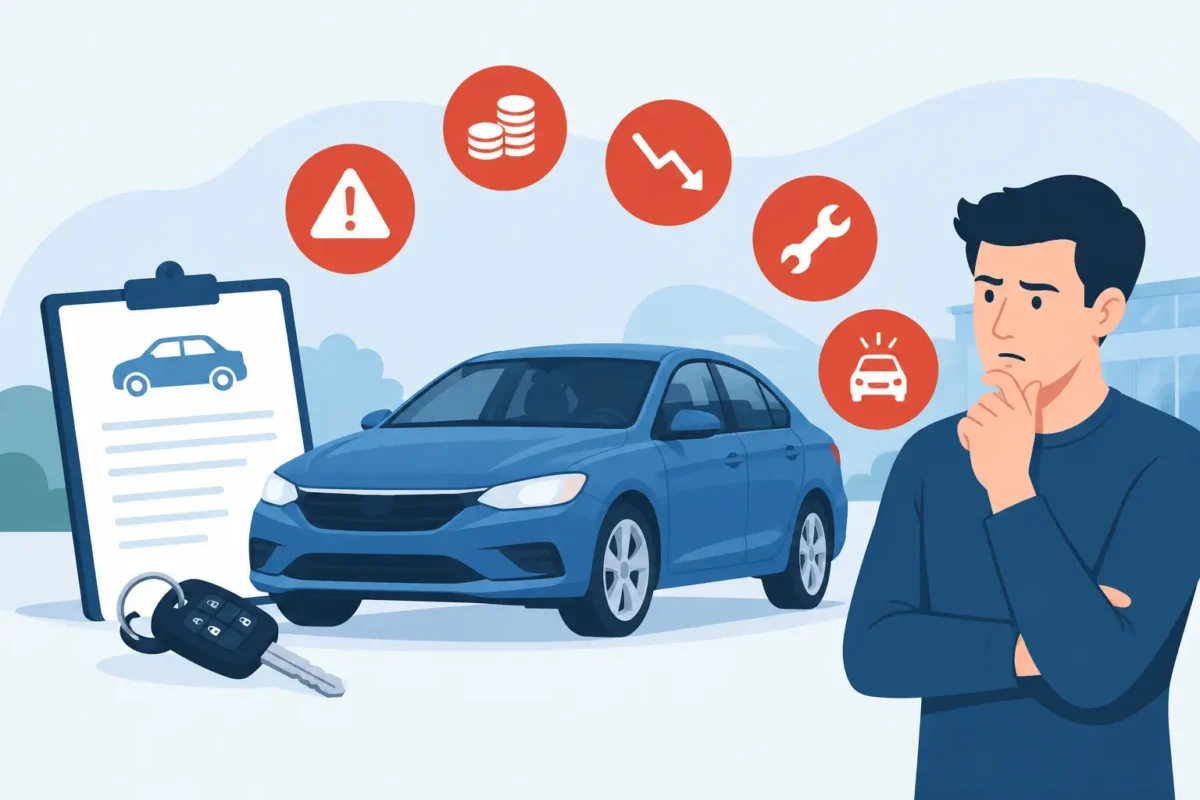
The payment due date is not the only time to think about your auto loan. A loan that felt manageable at the dealership can become a real source of pressure when your budget, credit, or interest-rate options change. These five car loan warning signs can help you recognize when it may be time to review your terms and see whether refinancing could offer relief.
1. Your monthly payment is crowding out essentials
A car payment should fit into your budget without forcing hard choices between transportation and necessities. If you are regularly delaying utility payments, relying on credit cards for groceries, or skipping savings because your car payment takes too much of each paycheck, the loan may no longer be working for you.
This does not necessarily mean you made a bad decision when you bought the vehicle. Life changes quickly. Rent can rise, hours can be reduced, a new child can add expenses, or an unexpected repair can take a bite out of your savings. The payment that worked a year or two ago may be uncomfortable now.
Refinancing may help lower your required monthly payment by qualifying you for a better rate, extending the repayment term, or both. A longer term can create more room in your monthly budget, but it is worth looking at the trade-off. Extending a loan can mean paying more interest over the full life of the loan, even if the payment is lower each month.
The goal is not simply the lowest possible payment. It is a payment that gives you breathing room while still making sense for your longer-term financial goals.
2. Your interest rate is higher than it needs to be
Your interest rate has a major effect on what you pay for your vehicle. Many borrowers accept a higher rate because they needed transportation quickly, had limited credit history at the time, or financed through the dealership without comparing other options.
A lot can change after you drive off the lot. Maybe you have made on-time payments, paid down other debt, corrected an issue on your credit report, or built a stronger credit profile. If your credit has improved, you may have a better chance of qualifying for more favorable loan terms than you had at purchase.
High rates are especially worth reviewing when you have a long remaining loan term. Even a modest rate reduction could potentially reduce interest costs or lower the monthly payment, depending on the new loan structure.
Check the full offer, not just the rate
A lower rate is encouraging, but it should not be the only number you consider. Compare the new payment, remaining term, estimated total interest, and any applicable fees. Also ask whether your current loan has a prepayment penalty. Not every borrower will qualify for the lowest advertised rates, so a clear, personalized quote is more useful than a headline number.
3. You have years left on a loan for a vehicle you bought long ago
Long auto loans can make a vehicle seem more affordable at the point of purchase, but they can leave you paying for it long after the new-car feeling is gone. If you still have four, five, or more years remaining on a loan for a vehicle you have already owned for several years, it is worth taking a closer look.
This can become a problem because vehicles typically lose value over time. When your loan balance declines slowly, you may owe more than the vehicle is worth. That is often called being upside down or underwater on the loan.
Being upside down does not automatically mean you need to refinance. In fact, refinancing cannot erase the difference between what you owe and what the vehicle is worth. But a refinance may still be useful if it helps you manage a high rate or an unaffordable payment without trading in the vehicle and rolling unpaid debt into another loan.
If you are considering a longer term to reduce your payment, be realistic about the car’s age, mileage, condition, and expected repair needs. A lower payment can be valuable, but you do not want to be making large loan payments on a vehicle that is becoming expensive to maintain.
4. Your loan has features you do not fully understand
Confusion is a warning sign in any financial agreement. You should be able to identify your current balance, interest rate, monthly payment, payoff date, and whether you have optional products included in your financing.
Some borrowers discover months later that their loan includes products they did not factor into their original payment, such as a vehicle service contract, GAP coverage, or other protection options. These products can provide meaningful value in the right circumstances, but you should understand what they cover, what they cost, and whether they are financed as part of the loan.
Review your retail installment contract and most recent statement. If the numbers are difficult to follow, call your lender and ask for a payoff amount and a breakdown of your account. Getting clear answers is not being difficult. It is how you make a confident decision about your next step.
Refinancing can be a chance to simplify your loan, but it is also a moment to consider protection thoughtfully. For example, GAP coverage may matter more when you owe more than the vehicle is worth. The right choice depends on your loan balance, insurance coverage, vehicle value, and comfort with financial risk.
5. You avoid checking your balance because you are worried about it
Sometimes the clearest warning sign is emotional. If you avoid opening lender emails, do not know how much you owe, or feel stressed every time the payment date approaches, your auto loan deserves attention.
Financial stress grows when the numbers stay unclear. Start with a simple review: your current monthly payment, interest rate, payoff balance, remaining months, vehicle mileage, and approximate vehicle value. You do not need to solve everything in one sitting. You just need a clear picture of where you stand.
If you have missed payments or are close to missing one, act sooner rather than later. Late payments can add fees, damage your credit, and make future financing more difficult. Contact your current lender to understand available options, and avoid ignoring calls or notices. If refinancing is an option, applying before your situation becomes more serious may give you more choices.
When refinancing may make sense
Refinancing is not only for people in a financial emergency. It can make sense when your credit has improved, your interest rate is high, your payment no longer fits your household budget, or you want terms that better match your current needs.
The process is usually straightforward. You provide information about yourself, your vehicle, and your existing loan. A lender reviews the details and, if you qualify, presents an offer. From there, compare it with your current loan carefully. A refinance should improve something meaningful for you, whether that is your monthly cash flow, rate, repayment timeline, or overall confidence in the loan.
At OpenRoad Lending, borrowers can explore refinance options online and receive support from refinance specialists when they need help understanding their choices. A quote is a way to gather information, not a commitment to move forward.
Have these details ready
Before you apply or request a quote, gather your vehicle identification number, current lender name, approximate payoff balance, monthly payment, and the vehicle’s current mileage. Having accurate information can help the process move faster and make it easier to evaluate an offer.
Do not wait for a missed payment or a budget crisis to look at your auto loan. A few minutes spent reviewing the numbers today could reveal an opportunity to make your payment more manageable and put more control back in your hands.