
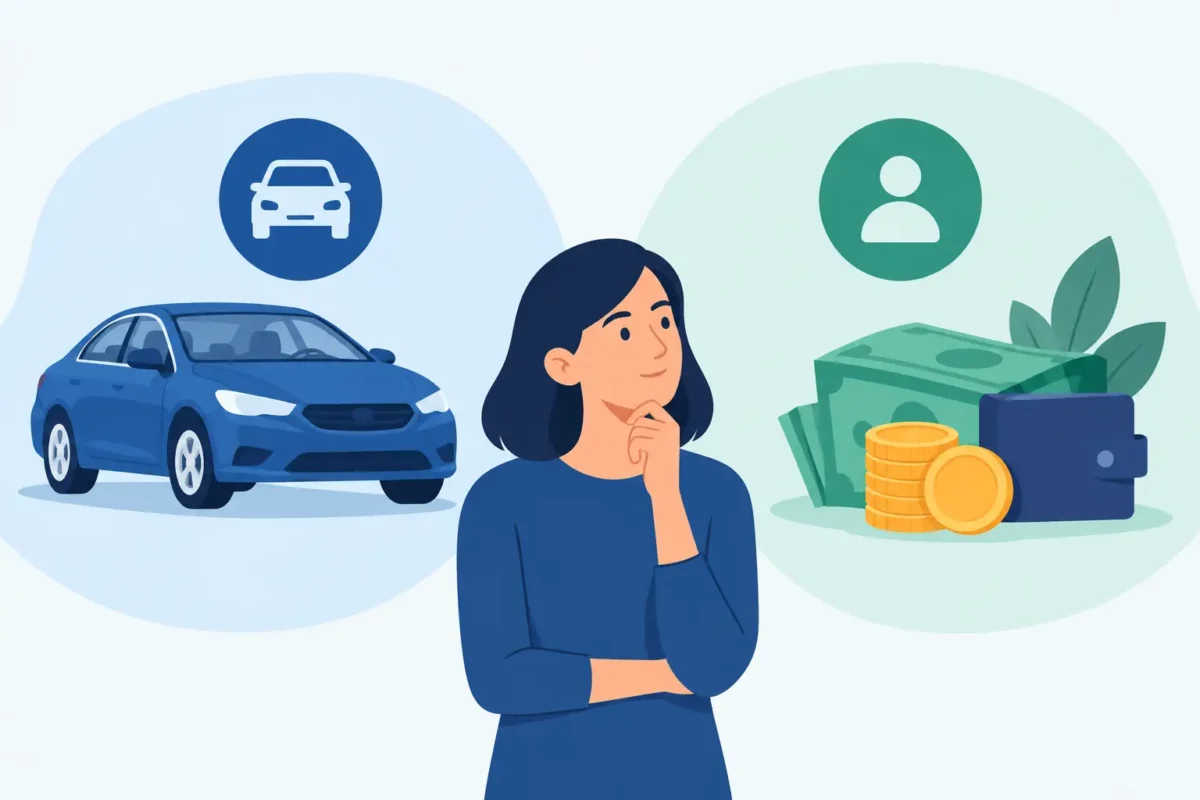
Your current car payment may be taking more out of your budget than it should. When you compare an auto refinance versus personal loan, the better choice usually comes down to one question: Are you trying to improve the loan on the vehicle you already own, or do you need flexible funds for another purpose?
Both options can affect your monthly cash flow and interest costs. But they work differently, come with different trade-offs, and may have very different approval requirements. Knowing where each option fits can help you avoid replacing one expensive payment with another.
Auto Refinance Versus Personal Loan: The Core Difference
Auto refinancing replaces your existing car loan with a new auto loan. The new lender pays off your current lender, and you begin making payments under the new rate, term, and monthly payment. Your vehicle serves as collateral for the loan.
A personal loan is typically unsecured, meaning you generally do not use your car or another asset as collateral. You receive a lump sum and can use it for many purposes, including debt consolidation, repairs, medical bills, or other major expenses. If you used a personal loan to pay off an auto loan, you would no longer have an auto loan, but you would still owe the personal lender.
That distinction matters because secured auto loans often have lower interest rates than unsecured personal loans for borrowers with similar credit profiles. A lender has the vehicle as security, which can reduce its risk. A personal loan gives you more flexibility, but that flexibility may cost more.
When Auto Refinancing May Make More Sense
Refinancing is built for borrowers who want to change the financing on a vehicle they already own. It can be worth exploring if your credit has improved since you bought the car, market rates have changed, or your original loan came with a high rate.
A lower annual percentage rate can reduce the total interest you pay, particularly if you refinance early in your loan term. You may also be able to lower your monthly payment by choosing a longer repayment term. That can free up room in a tight household budget, although it may increase the total interest paid over time.
For example, a driver who financed a vehicle when their credit was still recovering may now qualify for better terms after a year of on-time payments and lower credit card balances. Replacing the old loan with a lower-rate auto loan could create meaningful monthly savings without changing vehicles.
Auto refinancing can also provide a clearer, more focused solution than taking out a new unsecured loan. The new loan is tied to one purpose: paying off the existing vehicle loan. You are not borrowing extra money for unrelated expenses, which can make it easier to keep your financial plan on track.
There are limits, though. Lenders may have requirements for vehicle age, mileage, loan balance, loan-to-value ratio, income, and credit history. If your car is older, has high mileage, or is worth less than what you owe, your refinancing options may be narrower.
When a Personal Loan Could Be the Better Tool
A personal loan may make sense when your goal goes beyond your vehicle loan. Perhaps you need to consolidate several high-interest debts, cover a major expense, or simplify multiple monthly bills into one payment. Since personal loan proceeds can usually be used broadly, they can offer more flexibility than auto refinancing.
It may also appeal to borrowers who do not want their vehicle tied to a new loan. With an unsecured personal loan, the car is not collateral. However, missing payments can still seriously damage your credit and may lead to collections or legal action, so unsecured does not mean consequence-free.
A personal loan could be worth considering if the available rate is competitive and you have a clear repayment plan. Borrowers with strong credit may find attractive offers. For many car owners, however, the rate on a personal loan will be higher than the rate available through auto refinancing.
Using a personal loan to pay off a car note can also create a hidden budgeting problem. It may feel helpful to remove the lien from the title, but a higher rate or shorter term could leave you with a larger monthly payment. Always compare the full cost, not just the type of loan.
Compare the Numbers Before You Decide
The monthly payment gets attention because it affects your budget right away. It should not be the only number guiding your decision.
Start with the interest rate and APR. The APR can include certain lender fees, so it gives you a better view of the borrowing cost than the rate alone. Then compare the repayment term. A longer term can lower the payment, while a shorter term can help you pay less interest overall if you can comfortably afford it.
Review whether either loan includes origination fees, title fees, prepayment penalties, or other charges. Many loans do not have prepayment penalties, but you should verify the details in your current loan agreement and any new loan offer. A fee can reduce or erase the savings from a lower rate.
It also helps to compare the total amount you will pay from this point forward. Look at your remaining balance and the remaining payments on your existing loan. Then compare that figure with the total repayment amount on a refinance offer or personal loan offer. This keeps you from focusing only on a lower payment that extends debt for several additional years.
Your Vehicle and Credit Both Matter
With auto refinancing, lenders typically review the vehicle along with your financial profile. The car’s value, age, mileage, and condition can influence whether you qualify and what terms are available. Your payment history on the current loan matters too.
With a personal loan, approval is generally more dependent on your credit score, income, existing debts, and payment history. Because there is no vehicle collateral, a lender may set a higher rate or stricter qualification standards.
Neither option guarantees savings. If your credit has declined, your debt-to-income ratio has risen, or your vehicle no longer meets lender requirements, a new loan may not improve your situation. Getting quotes and reviewing the terms before committing lets you make a decision based on actual numbers rather than assumptions.
A Simple Way to Choose
If your main goal is lowering the cost or payment of the car you already financed, start by looking at auto refinancing. It is designed for that job and may offer a lower rate than an unsecured loan.
If you need funds for multiple expenses or want to consolidate debt beyond your vehicle, a personal loan may be more practical. Just make sure the flexibility is worth any increase in rate, fees, or monthly payment.
Ask yourself three practical questions: Will this loan lower my payment or total cost in a way that matters? Can I comfortably handle the new term? Does it solve the financial problem I actually have? Clear answers can prevent a rushed choice.
How to Prepare for an Auto Refinance Quote
Before applying, gather your current loan details, including the payoff amount, lender name, interest rate, monthly payment, and remaining term. Have your vehicle information ready as well, such as the year, make, model, mileage, and VIN. Reviewing your budget beforehand helps you decide whether you prioritize a lower payment, a shorter payoff timeline, or both.
You should also check your credit reports for errors and make sure your contact, employment, and income details are current. If you receive a refinance offer, read it carefully. Confirm the new APR, payment amount, loan term, and any fees before accepting.
OpenRoad Lending helps eligible vehicle owners explore refinancing options through a straightforward online process, with support available when questions come up. A quote gives you a concrete place to start: the chance to compare a new payment and term against the loan you have now.
The right financing choice should make your next payment feel more manageable, not add new uncertainty. If your current auto loan is stretching your budget, taking a few minutes to see whether refinancing could improve the terms may be a practical next step.